I love creating solutions for real life problems.
Started as Computer Science engineer, turned into HCI researcher, now moving into product. I bring user research, data and a technical background to deciding what gets built and why.
Projects
MongoDB: free-to-paid conversion
Why active free-tier users don't upgrade, and twelve product opportunities to change that.
PayPath
An app that lets visually impaired people withdraw cash without help.
EquiLuna
A balance-board video game testing whether haptic and audio feedback together beat each one alone.
Experience
Currently working on evaluating self-promotion bias in LLMs advice on research and academic tasks.
Worked on increasing conversion from the free to the paid tier. Partnered with product, design and analytics to turn qualitative and quantitative findings into concrete next steps.
Background
Università di Trento. Erasmus at the University of Twente in 2025.
Universidad Carlos III de Madrid. Erasmus at Stockholm University in 2023.
Skills
Projects
MongoDB · Internship · 2026Increasing free-to-paid conversion
A nine-week study into why active free-tier users of MongoDB Atlas don't upgrade, ending in a prioritised set of product opportunities for the Growth team.
- Role
- UX Research Intern, full ownership of the project
- Timeline
- 9 weeks, June to August 2026
- Worked with
- Growth Product, Marketing, Analytics and Design
- Methods
- 10 interviews, survey of 104 users, prioritisation workshop
Problem
Atlas has a very large free tier, but only a small share of those users ever move to a paid plan. The Growth team needed to know what holds them back, and whether developers who build with AI tools behave differently from everyone else.
Evidence
I interviewed ten active users, split between long-term free-tier users and recent upgraders, half of them heavy AI users. I then surveyed 104 users to test which patterns held at scale.
The findings themselves are confidential to MongoDB and are not disclosed here.
Options and decision
I turned the findings into twelve opportunities in three groups, then ran a workshop with Growth stakeholders to place each one by effort and expected impact.
Discoverability first, starting with freemium-style access that lets free-tier users try a limited version of paid features inside their own project. People can't want what they have never seen. It offered high expected impact for medium effort.
Outcome
The internship ended with the final readout, so nothing has been tested or decided yet. The Growth team left with the findings, a ranked map of opportunities and a list of paths to research and test next.
What I'd do next
The survey sample was too small to give statistically firm answers, so I would rerun it at larger scale. In parallel I would test the low-effort ideas as small experiments before committing to the expensive ones.
University of Twente · Product lead · 2025-26PayPath
An app that lets visually impaired people withdraw cash without help, by moving the ATM interaction onto their own phone.
- My part
- Acted as product manager, coordinating design and research. Also interviewing, qualitative analysis and early-stage design
- Timeline
- 4 months, 2025-26
- Context
- Basics of Impact, Entrepreneurship and Innovation course, design team of two
- Methods
- Interviews, ethnography, Figma prototyping, evaluation with 7 users
Problem
Withdrawing cash is routine for most people and a real obstacle for visually impaired users. Where does the card go? Where are the buttons? Is someone looking at my information?
Evidence
We ran interviews and ethnographic observation with visually impaired users to find where the ATM experience breaks down. One finding shaped everything after it: most blind users are expert screen-reader navigators on their own phone.
Decision
We moved the interaction off the machine and onto the user's phone. Cards are stored in a wallet inside the app, and the whole withdrawal is done through screen-reader navigation, a skill these users already have.
What we built
After an ideation phase we designed the app as a low-fidelity and then a high-fidelity prototype in Figma.


Outcome
We evaluated the prototype with 7 visually impaired users to judge how well the app and its interaction worked, and which parts had to be redesigned.
The evaluation went well: the app worked for them, and most participants were optimistic about using it in a real-life setting.
What I'd do next
Integrate the app with existing mobile banking apps and with real ATMs, so the withdrawal works end to end outside a prototype.
University of Trento · Team of 3 · 2024-25EquiLuna
A balance-board video game built to test whether combining haptic and audio feedback helps people balance better than either one alone.
- My part
- Interface code, board build, user testing, statistical analysis
- Timeline
- 4 months, 2024-25
- Context
- Multisensory Interactive Systems course, team of three
- Tools
- Arduino, 3D printing, Processing, R
Problem
Feedback helps people correct their balance, which matters for motor recovery. We wanted to know whether two kinds of feedback at once, vibration and sound, work better than each one alone in a balancing task.
What we built
A balance board that rocks along one axis, fitted with a motion sensor that reads how fast it tilts. The board controls a space-themed game where the player steers an astronaut along a set path. Two sets of vibration motors and a loudspeaker tell the player when they drift off course.
How we tested it
We ran a study with 16 participants and scored each run on two metrics: path accuracy, and how closely the player's path matched the target (path similarity). Afterwards, the session data was analysed in R.
Outcome
The results aligned with the Principle of Inverse Effectiveness, which states that multimodal feedback has the greatest impact when responses to each single mode of feedback are weak. In practice, combined feedback helped most the participants who struggled with a single type.
The paper was accepted at the CHItaly 2025 conference, and the project received maximum marks in the course.
What I'd do next
The haptic feedback was set up so that a signal on the left meant the user should rotate away from the left. I would test whether reversing this, so that users rotate towards the source of the feedback, changes the results.
Research
Published papers, from speech recognition and multisensory feedback to machine learning for cybersecurity.
A Comparative Evaluation of Automatic Speech Recognition Performance for European and Latin American Spanish using Whisper V3
We compared Whisper transcription accuracy across European and Latin American Spanish. Using Word Error Rate analysis, we found consistently higher error rates for Latin American speakers.
Read on ResearchGate → Multisensory feedback · CHItaly · 2025Enhancing Balance Through Multisensory Gaming: Evaluating Haptic and Auditory Cues for Rehabilitation
The EquiLuna study: a balance-board video game used to test whether combined haptic and auditory feedback helps people balance better than either one alone, in a study with 16 participants.
Read on the ACM Digital Library → Deep learning · Cybersecurity · 2024Applying Deep Learning and Data Analytics to identify Malware Attacks
An empirical study of deep learning models for detecting different cyber attacks, mainly recurrent neural networks (RNN), long short-term memory networks (LSTM) and convolutional neural networks (CNN).
Read on ResearchGate → Machine learning · Cybersecurity · 2024A review of Machine Learning Algorithms used for Cyber Attacks
A review of how effective machine learning algorithms are against cyber attacks. It identifies what the approaches have in common and offers guidelines for newcomers to the field.
Read on ResearchGate →
Hello! I'm Markel.
I like turning real-life problems into things people can use. I started as a computer science engineer, moved into human-computer interaction to understand the people on the other side of the screen, and found in product management the place where the two meet: deciding what to build and why.
I believe technology is one of the best tools we have to shape society, and I want to build products that solve problems and open up opportunities for people from all walks of life.
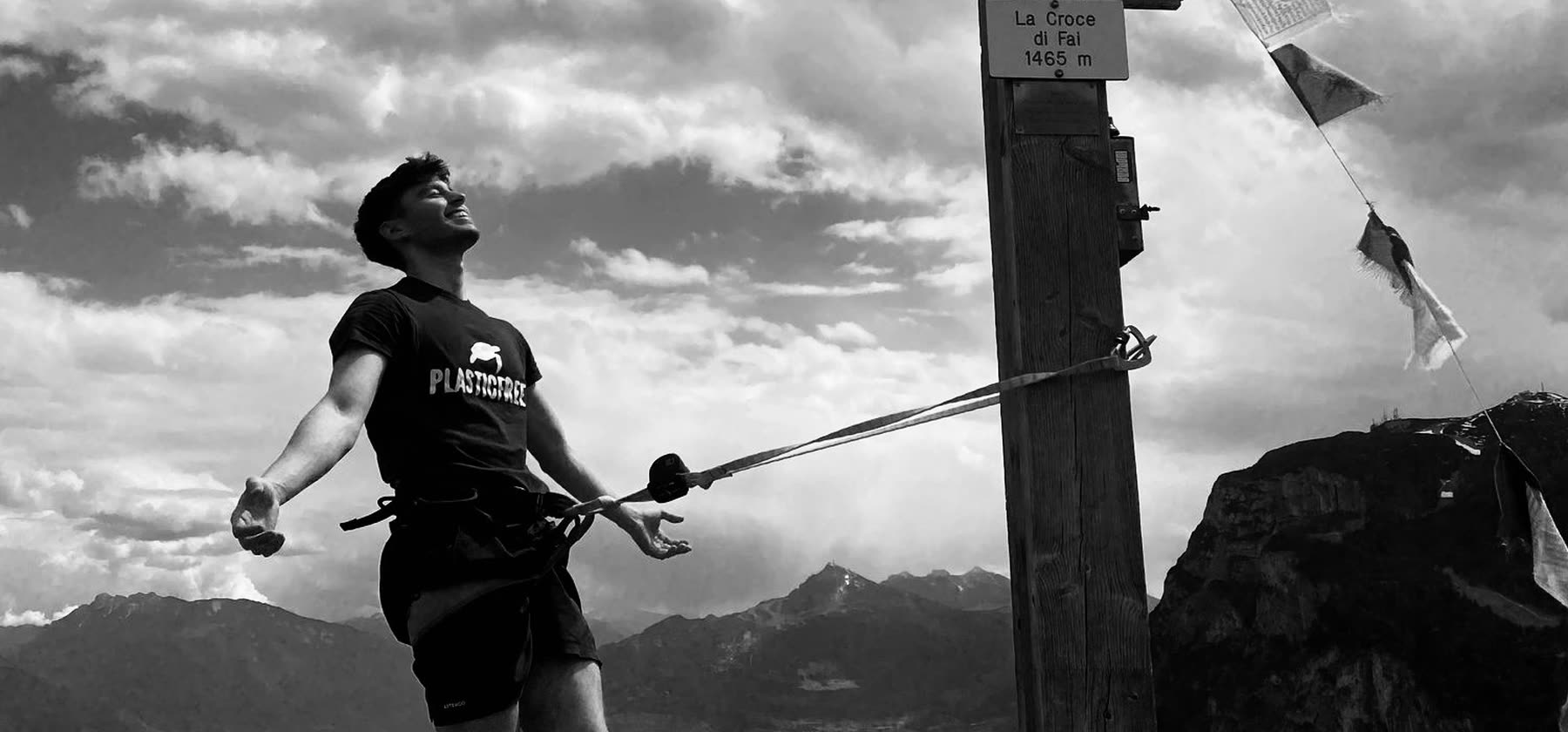
A bit more about me: I love hiking, travelling and video editing. Five years as a summer instructor taught me the value of inclusivity, patience and teamwork, and I carry those into every team I work with.